Australia Visitor Visa (Subclass 600) Requirements 2026: The Complete Guide
Updated: 12 October 2026 · 11 min read
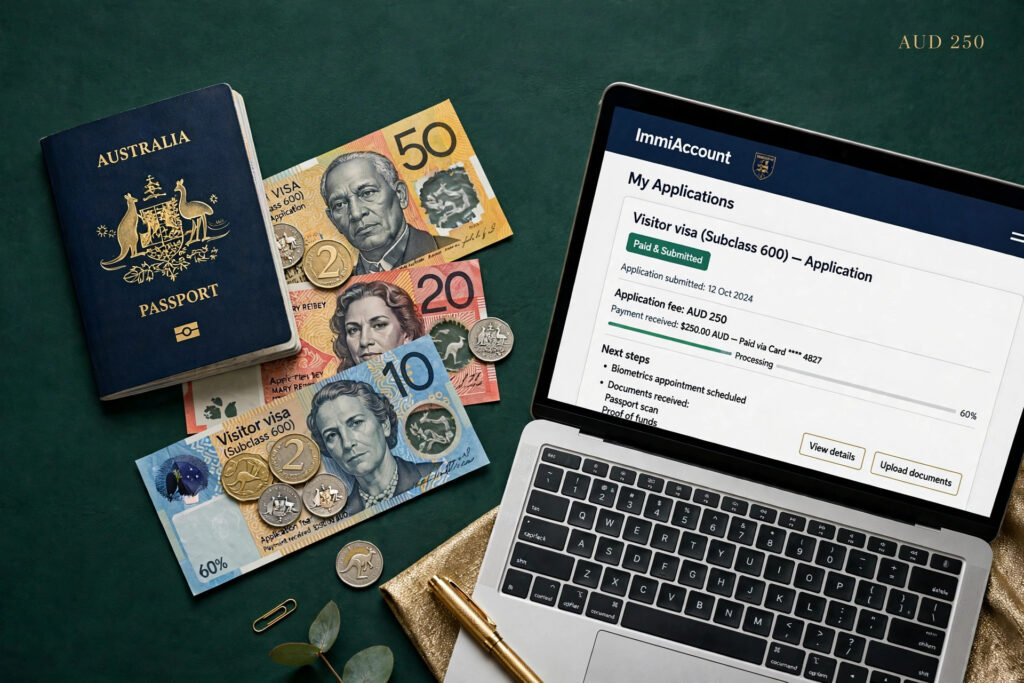
The Visitor visa (subclass 600) is Australia’s main visitor visa for travellers not eligible for the ETA or eVisitor, covering holidays, cruises, and family visits with stays granted at 3, 6, or 12 months. In 2026 the fee is AUD 250 for offshore applications; you must show genuine temporary intent and enough money to fund the trip without working.
If you are working through the australia visitor visa subclass 600 requirements 2026 for a holiday, a family visit, or a business trip, here is the single most useful thing to understand first: the Department of Home Affairs does not publish a pass/fail tick-box list. Every decision rests on three questions — is this a genuine temporary visit, can you pay for it without working in Australia, and do you meet the health and character standards. Every document you submit exists to answer those three questions.
This guide covers the full picture in plain language: the five streams and which one fits your trip, the 2026 fee increase and why different websites quote different numbers, how funds are really assessed, the documents in order of importance, the ImmiAccount application process step by step, and the refusal traps that catch the most applicants. Most refusals are preventable — they trace back to a small number of fixable mistakes.
- Who actually needs the Subclass 600 in 2026
- The five streams — which one fits your trip?
- The 2026 fee: why every site quotes a different number
- The three tests every applicant must pass
- How much money do you actually need to show?
- The documents checklist, in order of importance
- How to apply through ImmiAccount, step by step
- Why Subclass 600 applications get refused
- FAQs: Australia visitor visa subclass 600
- The Subclass 600 is the visitor route for nationalities not covered by the ETA (601) or eVisitor (651) — including China, India, most of Africa and South America.
- The offshore Tourist stream fee is AUD 250 since the 1 July 2026 increase; the fee is non-refundable even if the visa is refused. Figures like AUD 190 are outdated.
- There is no published minimum bank balance — officers assess a consistent financial story over about six months, not a single magic number.
- You must apply and be granted while outside Australia (Tourist stream offshore); the visa is electronic, linked to your passport — no stamp, no passport submission.
- Around 75% of Tourist stream cases are finalised within roughly 20 days and 90% within roughly 33 days — apply well ahead of your travel date.
Four numbers every applicant should know before applying
Who actually needs the Subclass 600 in 2026
Australia runs three visitor visa subclasses, and the Subclass 600 is the workhorse — the one with the broadest coverage and the most paperwork. The Electronic Travel Authority (subclass 601) and the eVisitor (subclass 651) are the fast, cheap options, but they are passport-gated: the ETA covers around 37 countries and costs about AUD 20, while the eVisitor is free but limited mostly to European passports. If your passport is not on either list — China, India, most of Africa, most of South America, much of the Middle East — the Subclass 600 is your route.
You also need the 600 even with an eligible passport when the trip itself goes beyond the ETA’s limits: stays longer than three months, extended family visits, business activities beyond what the streamlined visas allow, or a travel history that needs explanation (previous refusals or overstays anywhere in the world). In short, the 600 is the visa for everyone and every trip the shortcuts cannot handle.
The 2026 context matters. The requirements themselves have not been rewritten this year, but the Department has tightened two things: the application charge rose significantly on 1 July 2026, and case officers are reported to be applying the genuine-visitor test more strictly — well-documented, consistent files matter more than ever.
The five streams — which one fits your trip?
The Subclass 600 is not one visa but five streams sharing a form. Choosing the right one is not a formality; applying under the wrong stream is one of the simplest ways to slow or sink an application. Here they are, side by side:
| Stream | Who it’s for | Stay granted | Fee (AUD) |
|---|---|---|---|
| Tourist (apply outside Australia) | Holidays, cruises, visiting family and friends | 3, 6 or 12 months | 250 |
| Tourist (apply in Australia) | Extending a visit already in progress | Up to 12 months | ~630 |
| Business Visitor | Conferences, meetings, negotiations — no work | Up to 3 months | 250 |
| Sponsored Family | Family visits with a sponsor in Australia who lodges an undertaking; a security bond can be required | Up to 12 months | 250 |
| Approved Destination Status (ADS) | PRC citizens on organised tour groups | As granted | 250 |
| Frequent Traveller | Frequent visitors from listed Asian nationalities; 10-year visa validity, up to 3 months per entry | 3 months per entry | Higher (check estimator) |
The Frequent Traveller stream is limited to passport holders from the People’s Republic of China, Brunei, Cambodia, the Philippines, Laos, Indonesia, Malaysia, Singapore, Thailand, Vietnam and Timor-Leste. Fees change — confirm the exact charge on the Department’s Visa Pricing Estimator before paying.
Most readers of this guide are Tourist-stream applicants applying from outside Australia. A note on the Business Visitor stream: it covers business visiting — meetings, conferences, negotiations — not working. Taking up employment on a visitor visa is a condition breach that can lead to cancellation.
The 2026 fee: why every site quotes a different number
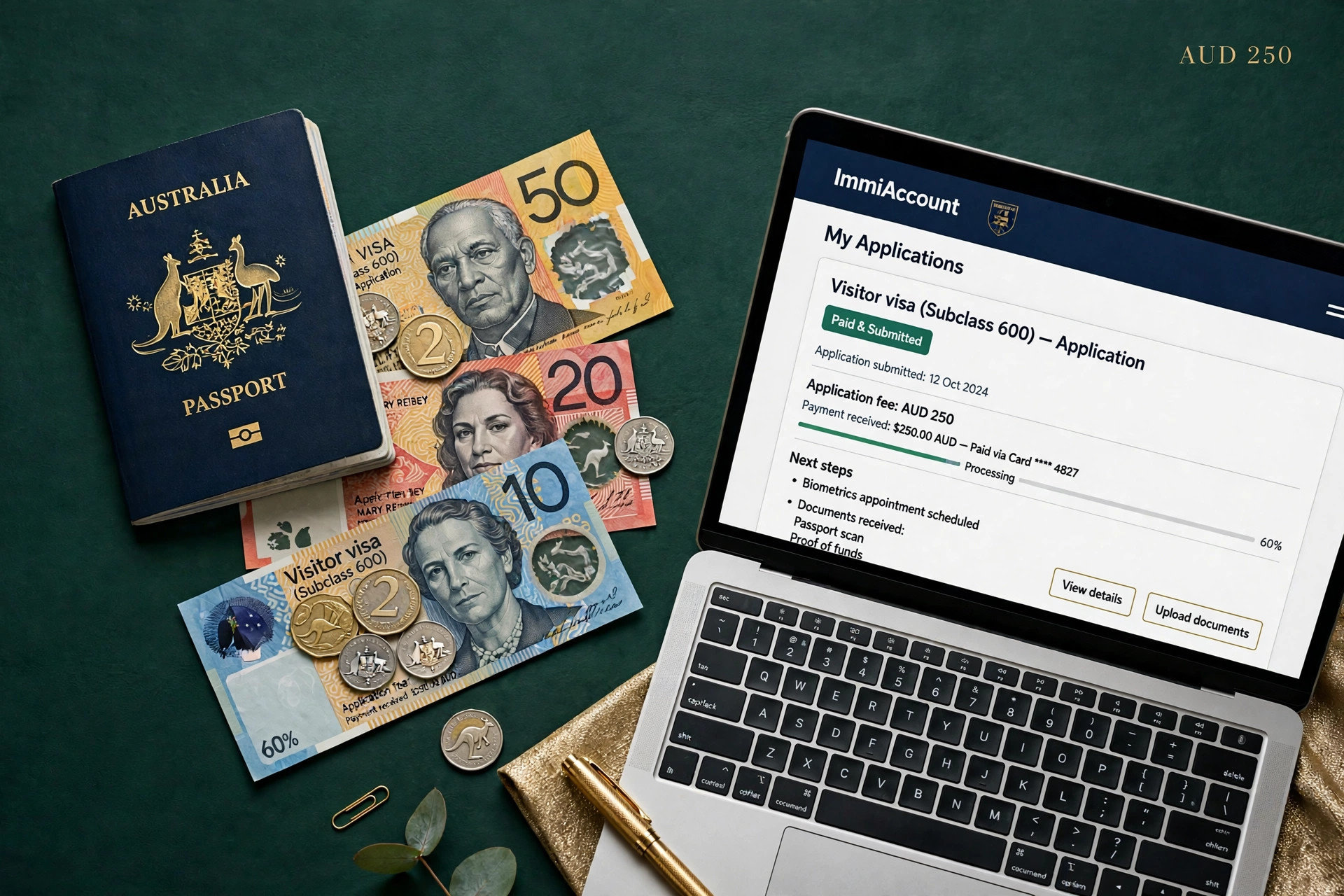
Type “Australia visitor visa fee” into a search engine and you will see AUD 190, AUD 200, and AUD 250 — sometimes on the same results page. Here is what actually happened. On 1 July 2026, Australia’s annual visa application charge update raised the Subclass 600 offshore fee from AUD 200 to AUD 250 — a 25% jump that the tourism industry publicly questioned at the time. The Department of Home Affairs now lists the Tourist stream (applying outside Australia) at AUD 250.00 on its own visa pages.
So where do the lower figures come from? AUD 190 belongs to the era before earlier increases — websites that have not updated since then are quoting a dead number. AUD 200 was the correct fee until 30 June 2026, so pages updated any time in the previous year show it. Both are now wrong for new applications. The fee is the visa application charge: it is payable online in ImmiAccount, it is non-refundable even if the visa is refused, and it is only the start of the real cost — medical examinations run a few hundred dollars where required, and police certificates, translations, and a possible security bond under the Sponsored Family stream add more.
Two more fee points worth knowing. Applying from inside Australia (onshore Tourist stream) costs roughly AUD 630 — considerably more than the offshore fee. And from 1 July 2026, a lower cost applies to eligible Pacific Island and Timor-Leste citizens, a concession the Department recognises automatically in ImmiAccount. For any stream, the safest figure is always the one the Department’s Visa Pricing Estimator produces for your exact circumstances.
The three tests every applicant must pass
Strip away the forms and the checklists and the case officer is weighing three things. Understand them and the document strategy writes itself.
1. Genuine temporary stay — will you actually leave?
This is the heart of the visa and the reason behind most refusals. “Genuine visitor” is not a feeling the officer gets; it is an evidence picture you build: a clear purpose and realistic itinerary, strong ties pulling you home (a job with approved leave, a business, property, family responsibilities), and a travel history that shows you respect visa conditions. First-time travellers and applicants with thin travel history are scrutinised harder — which is why old passports showing previous compliant trips are worth uploading.
2. Enough money — can you fund the trip without working?
You must have enough money for your stay and your return home, and the Department must believe the money is genuinely yours and stable. There is no published minimum — the section below unpacks what officers actually look at — but the logic is simple: the funds should fit the trip you are proposing, arrive through believable channels, and not have appeared by magic the week before you applied.
3. Health and character — are you admissible?
You must meet Australia’s health requirement: a medical examination can be required depending on your country, your age, and the length of the stay, and the Department will tell you if one is needed. On character, police certificates can be requested where the officer has concerns — declare any criminal history honestly, because a discovered omission damages credibility far more than an old offence disclosed upfront. Biometrics (fingerprints and photograph) may also be requested; where they are, you attend a Visa Application Centre after lodging.
Planning an Australia trip? Check your file before a case officer does.
Most Subclass 600 refusals trace back to weak genuine-visitor evidence, inconsistent funds, or thin documentation — the exact patterns a case officer scans for. The Visaora Intelligence Suite reviews your visitor-visa case file against those patterns and shows you what to strengthen first.
Check My Score →How much money do you actually need to show?
This is the most-asked question in the category, and the honest answer is that Home Affairs publishes no fixed minimum bank balance. Anyone quoting you an official figure is inventing one. What follows is how officers actually assess funds, assembled from the patterns that appear again and again in guidance and decisions.
- Think per-month, not one number. Migration advisers commonly work with a guideline of roughly AUD 5,000 to 10,000 per month of stay, plus the cost of return flights — a two-week trip needs a very different picture than a three-month family visit. Use it as a sanity check, not a rule.
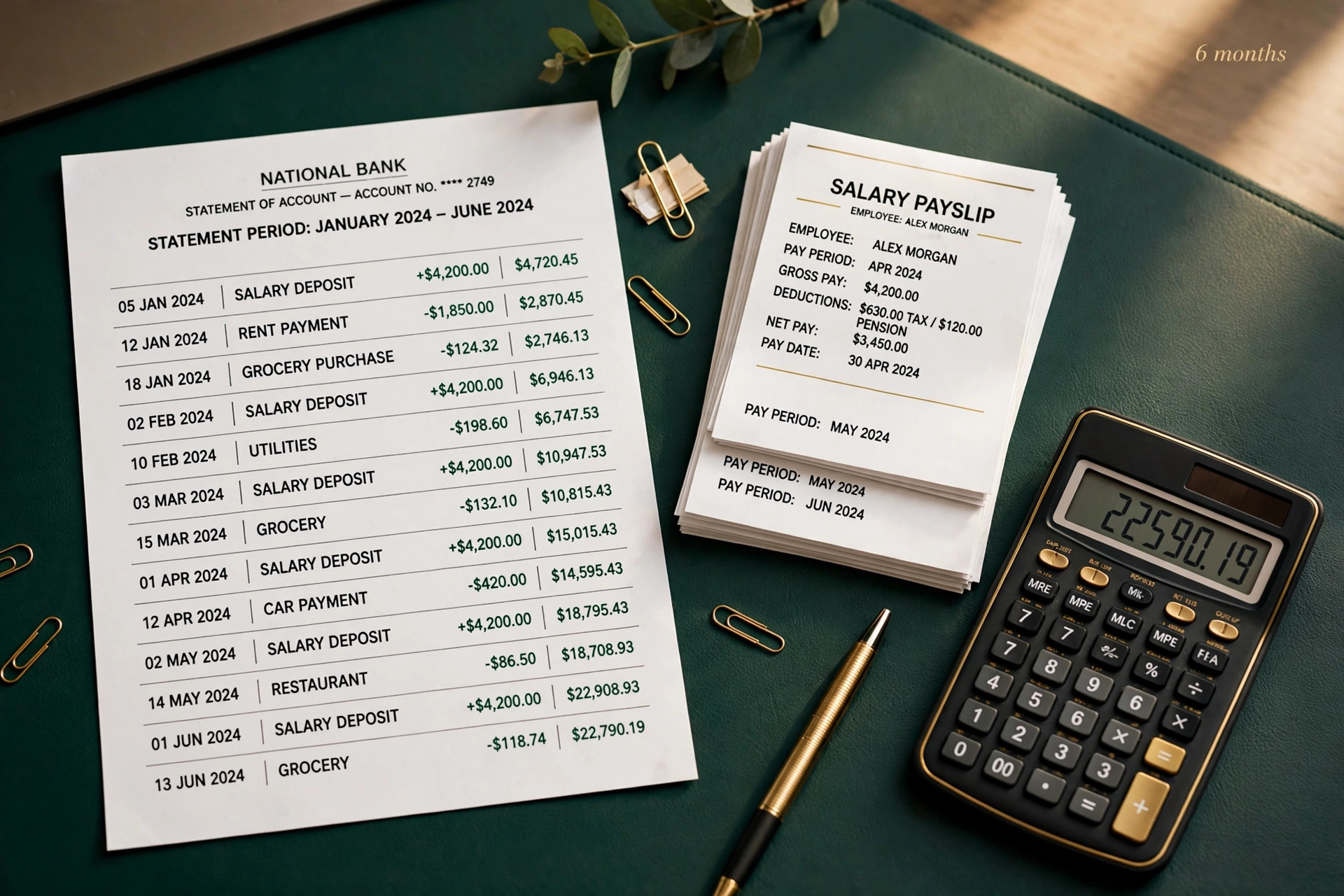
- Six months of statements, not one screenshot. Officers want to see regular income landing and a stable or growing balance. Salary credits should match your stated occupation; the savings should fit the travel plan you described.
- One big deposit is a red flag, not a solution. A large unexplained deposit shortly before applying reads as borrowed money and actively undermines the file. A consistent financial story beats a sudden large balance every time.
- Broaden the evidence. Fixed deposits, payslips, tax returns, rental income, and credit-card statements showing available credit all help. If a family member is sponsoring the trip, their financial documents — plus proof of the relationship — travel with your own.
For a wider comparison of how different countries assess student and visitor finances side by side, see our proof-of-funds comparison guide (UK vs Canada vs Australia vs USA) — the same principles of consistency and source-of-funds evidence apply.
The documents checklist, in order of importance
Prepare everything before you start the online form — chasing documents mid-application is how names get misspelled and the wrong statement gets uploaded. Listed in roughly the order officers weigh them:
- Passport — valid for your intended stay; officers prefer at least six months’ validity beyond your travel dates, with blank pages. Include old passports showing travel history.
- The completed online application — the Subclass 600 form is lodged through ImmiAccount; every question answered, nothing left blank.
- Photograph — recent, 45mm x 35mm, white background, full face visible.
- Financial evidence — six months of bank statements, payslips, tax returns, fixed deposits, and any sponsor’s financial documents.
- Employment or business proof — an employer letter on company letterhead with your position, salary, and approved leave dates; business owners show registration and tax records.
- Ties to home country — property documents, family evidence, business commitments — anything that shows a life you are returning to.
- Travel plan — a realistic itinerary with dates and destinations, plus accommodation bookings or an invitation letter from the family you are visiting. You do not need confirmed flight bookings, and the Department advises against non-refundable travel before the visa is granted.
- Cover letter — a plain-language page explaining who you are, why you are going, what you will do, and why you will come back.
- Invitation letter — where visiting family or friends: their invitation, plus their visa or residency status in Australia.
- Travel insurance — not mandatory for the application, but strongly recommended: medical treatment in Australia is expensive and visitors are not covered by Medicare.
- Identity documents — national ID, birth or marriage certificates where they support the application.
Upload clear, readable scans in PDF or JPEG. Illegible or sideways documents delay the case while the officer requests them again — small sloppiness, real consequences.

How to apply through ImmiAccount, step by step
- Check the shortcuts first. If your passport qualifies for the ETA (subclass 601, about AUD 20) or eVisitor (subclass 651, free), those are faster and cheaper. Only continue with the 600 if they do not fit.
- Gather the file. Work through the checklist above before touching the portal.
- Create an ImmiAccount on the Department’s immigration site (immi.homeaffairs.gov.au) with an email address you check regularly.
- Select Visitor visa (subclass 600) and the correct stream for your trip — Tourist (offshore) for most readers of this guide.
- Complete the form carefully. Answer every question, even with “not applicable” where true. Inconsistencies between the form and your documents are a classic refusal trigger.
- Upload your documents as clear scans — PDF or JPEG — and double-check names, dates, and which year’s statements you attached.
- Pay the application charge. AUD 250 for the offshore Tourist stream, paid online. Remember: it is not refunded if the visa is refused.
- Complete biometrics and health checks if requested. The Department will tell you whether either applies to you; attend the Visa Application Centre or panel clinic promptly.
- Track and respond. Watch your ImmiAccount and email. If the officer requests more information, respond quickly and completely — silence is read against you.
- Wait for the decision, then travel. The grant notice arrives by email. Australian visitor visas are electronic — linked to your passport number, no stamp, no passport submission. Carry a printout of the grant letter with your passport when you travel, and check the conditions on it (including any “No Further Stay” condition 8503) before making plans.
On timing: the Department’s processing-time guide typically shows around 75% of Tourist stream applications finalised within roughly 20 days and 90% within roughly 33 days, though some offices and complex cases take longer. Apply at least six to eight weeks before travel — the fee is gone whether the visa arrives on time or not.

Why Subclass 600 applications get refused
Refusals in this category are rarely mysterious. The same five causes keep appearing in decisions:
- Unconvincing genuine-visitor evidence. The leading cause by distance: a vague itinerary, thin ties to home, or a travel history that does not reassure. The officer must believe the visit will end — silence reads as risk.
- Funds that do not tell a consistent story. A sudden large deposit, income that does not match the stated job, or a balance that could not plausibly fund the trip. Six stable months beat one impressive month.
- Sloppy or incomplete paperwork. Missing statements, an unanswered form question, unreadable scans, names spelled differently across documents — small errors, final consequences.
- Weak purpose documentation. No clear reason for the visit, no invitation where one was expected, an itinerary that looks copied rather than planned. Specifics disarm scrutiny.
- Condition misunderstandings. Applying to work on a visitor visa, or assuming you can switch to another visa onshore — some grants carry condition 8503 (No Further Stay), and since July 2024, visitor-visa holders generally cannot apply for a student visa from inside Australia. Read your grant letter.
One refusal costs you the fee — and months of plans.
Before you pay the non-refundable AUD 250, have the whole file — purpose evidence, funds, ties, documentation — reviewed the way a case officer will read it. The Visaora Intelligence Suite turns that review into a clear, ordered list of fixes.
Check My Score →FAQs: Australia visitor visa subclass 600
How much bank balance is required for an Australia tourist visa?
Home Affairs publishes no fixed minimum bank balance. As a working guideline, advisers commonly suggest showing roughly AUD 5,000 to 10,000 per month of your planned stay, plus return-flight costs, across about six months of statements. What matters most is a consistent financial story — regular income matching your occupation — not one large deposit made just before applying.
How long does it take to process an Australia visitor visa in 2026?
The Department’s processing-time guide typically shows around 75% of Tourist stream applications finalised within roughly 20 days and 90% within roughly 33 days. Times vary by office and case complexity, and applications needing extra checks take longer. Apply at least six to eight weeks before your travel date and check the current guide for the office handling your file.
Can I work on an Australian tourist visa?
No. The Subclass 600 carries a strict no-work condition — employment of any kind, including remote work, is not permitted. Working while on a visitor visa can lead to visa cancellation and problems with future applications. Short courses of up to three months are generally allowed, but anything longer needs a student visa applied for from outside Australia.
How long can I stay in Australia on the Tourist stream?
The stay period is decided when the visa is granted and is commonly 3, 6, or 12 months — check your grant notice for the exact period. Multiple entries can be granted within the visa’s validity. The border officer makes the final determination at each arrival, so the grant letter is the document that defines your stay.
What is the current fee for the Australia visitor visa in 2026?
The offshore Tourist stream fee is AUD 250, raised from AUD 200 on 1 July 2026 — figures like AUD 190 on older pages are outdated. The fee is paid in ImmiAccount and is non-refundable even if the visa is refused. Applying from inside Australia costs more, so always confirm the exact charge on the Department’s Visa Pricing Estimator.
Is an interview required for an Australia tourist visa?
No interview is typically required — the decision is made on the documents you submit through ImmiAccount. Some applicants are asked to give biometrics (fingerprints and a photograph) at a Visa Application Centre, and health examinations can be requested depending on your circumstances. Follow any instructions the Department sends after you lodge.
Can I extend my Australia visitor visa?
You can apply for another Tourist stream visa from inside Australia before your current one expires, but approval is not guaranteed and the onshore fee is higher. Some visas carry condition 8503 (No Further Stay), which blocks most onshore applications — check your grant letter. An extension is itself a new application with its own assessment.
Is the Australia visa stamped on the passport?
No. Australian visitor visas are fully electronic — the grant is linked to your passport number and no stamp or label is placed in the passport, so you never submit the passport itself. Carry a printout of the grant letter with you when travelling, since airlines verify the visa electronically against your passport.
The bottom line
The Subclass 600 asks for thorough paperwork and, in return, opens one of the world’s most sought-after destinations — for holidays, family reunions, and business visits alike. Get the stream right, pay the correct 2026 fee, build a funds picture that reads as a consistent story rather than a last-minute performance, and evidence your ties home as carefully as your plans in Australia. And start early: the fee is non-refundable, so a rushed application is the most expensive kind.
Planning the wider trip? Start with the free Australia visa tools on Visaora, browse more immigration guides, or — if you are thinking beyond a visit — read our coverage of Australia 190 invitation rounds and cut-offs to see how the skilled-migration route compares.
Official sources
- Department of Home Affairs — Visitor visa (subclass 600) (homeaffairs.gov.au)
- Department of Home Affairs — Tourist stream (apply outside Australia): stay, cost, processing (homeaffairs.gov.au)
- Department of Home Affairs — Tourist stream (apply in Australia) (homeaffairs.gov.au)
Disclaimer: This guide is general information, not legal advice. Visa fees, processing times, and requirements change — always confirm the current figures on immi.homeaffairs.gov.au before applying. Figures quoted reflect sources available at the time of writing and should be re-checked when you file.
✈️ Planning Your Trip?
We may earn a commission — at no extra cost to you. Learn more