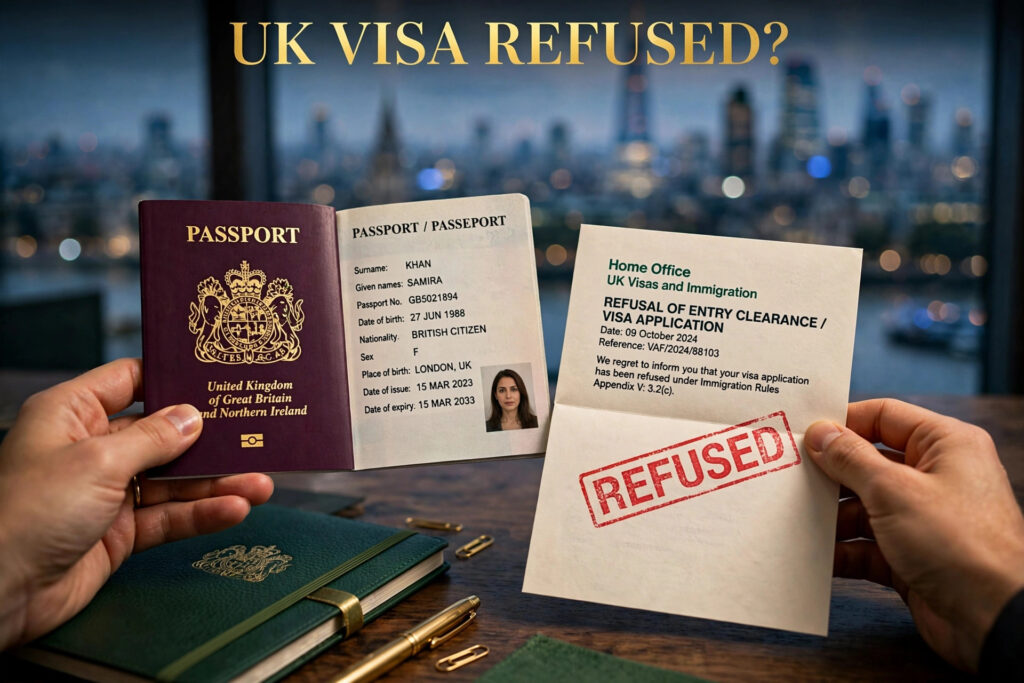
UK Visa Refusal Reasons and How to Reapply in 2026: A Plain-English Guide
Updated: 12 October 2026 · 11 min read
Looking up uk visa refusal reasons and how to reapply 2026? Most refusals come down to six problems: doubts you will leave the UK, unclear funds, an unclear trip purpose, weak documents, bad immigration history, or deception. There is no mandatory wait: reapply once every point in your refusal letter is fixed, with a letter answering each one.
Opening a UK visa refusal letter feels personal — but it is not. It is a checklist that missed its marks, and if you are searching for uk visa refusal reasons and how to reapply 2026, you have already taken the most important step: refusing to send the same application twice. The Home Office keeps your first file on record, so the second one has to be visibly stronger, point by point. This guide walks you through the six reasons refusals actually happen, how to decode the letter you received, your options (reapply, administrative review, or legal challenge), and a practical reapplication playbook — including special notes for applicants living in the Gulf.
A quick orientation first: the Standard Visitor visa (the one used for tourism, family visits, and business trips) costs £135 for a stay of up to six months, is applied for online before you travel, and usually gets a decision within about three weeks, according to gov.uk. Your passport must cover the whole stay, and any document not in English or Welsh needs a certified translation. None of that is the hard part. The hard part is convincing a caseworker you are a genuine visitor — and that is exactly what this guide teaches.
Before you reapply, the free visa approval predictor can flag weak spots in your new file; it is a screening aid, not a decision.
- Why a UK refusal stings — and why the letter is gold
- UK visa refusal reasons: the 6 patterns behind most refusals
- How to read your refusal letter like a caseworker
- No waiting period: reapply vs appeal vs judicial review
- How to reapply: the step-by-step playbook
- The cover letter that answers the refusal
- Applying from the Gulf: UAE and Saudi notes
- FAQs: UK visa refusal and reapplication
- The two refusal reasons that sink most visitor applications are failing the genuine-visitor test and money that does not add up — both are fixable with better evidence, not a different story.
- There is no mandatory cooling-off period: you can reapply immediately, but only after fixing every issue the refusal letter raised.
- Visitor refusals carry no right of appeal; the letter’s own offer of administrative review is rare. A corrected fresh application is usually faster and cheaper than a legal challenge.
- Always disclose the refusal on every future application — an undiscovered refusal damages credibility far more than an admitted one.
- Deception is the one reason that turns a refusal into a long-term problem: false information can trigger a ban of up to 10 years under the Immigration Rules.
Four facts that set the frame for everything below
Why a UK refusal stings — and why the letter is gold
A UK refusal hits harder than most because it feels like a verdict on your credibility, not your paperwork. It rarely is. In the majority of visitor cases, the decision comes down to a caseworker reading your file in minutes and finding the evidence too thin to answer three silent questions: will this person leave when they say they will, can they genuinely afford this trip, and is the trip’s purpose believable? A refusal means the file failed to answer those questions — not that you are unwelcome forever.
Here is the reframe that matters: the refusal letter is the only document in the entire immigration process that tells you, in the Home Office’s own words, exactly what it wants to see next. Most applicants skim it once, feel angry, and either reapply unchanged (almost certain to fail again) or wait months in the vague hope that time will fix it. Time does not fix it. Evidence does. Treat the letter as a repair manual and the second application becomes a different, stronger file — which is precisely what the new caseworker needs to see, because they will read the old file first.
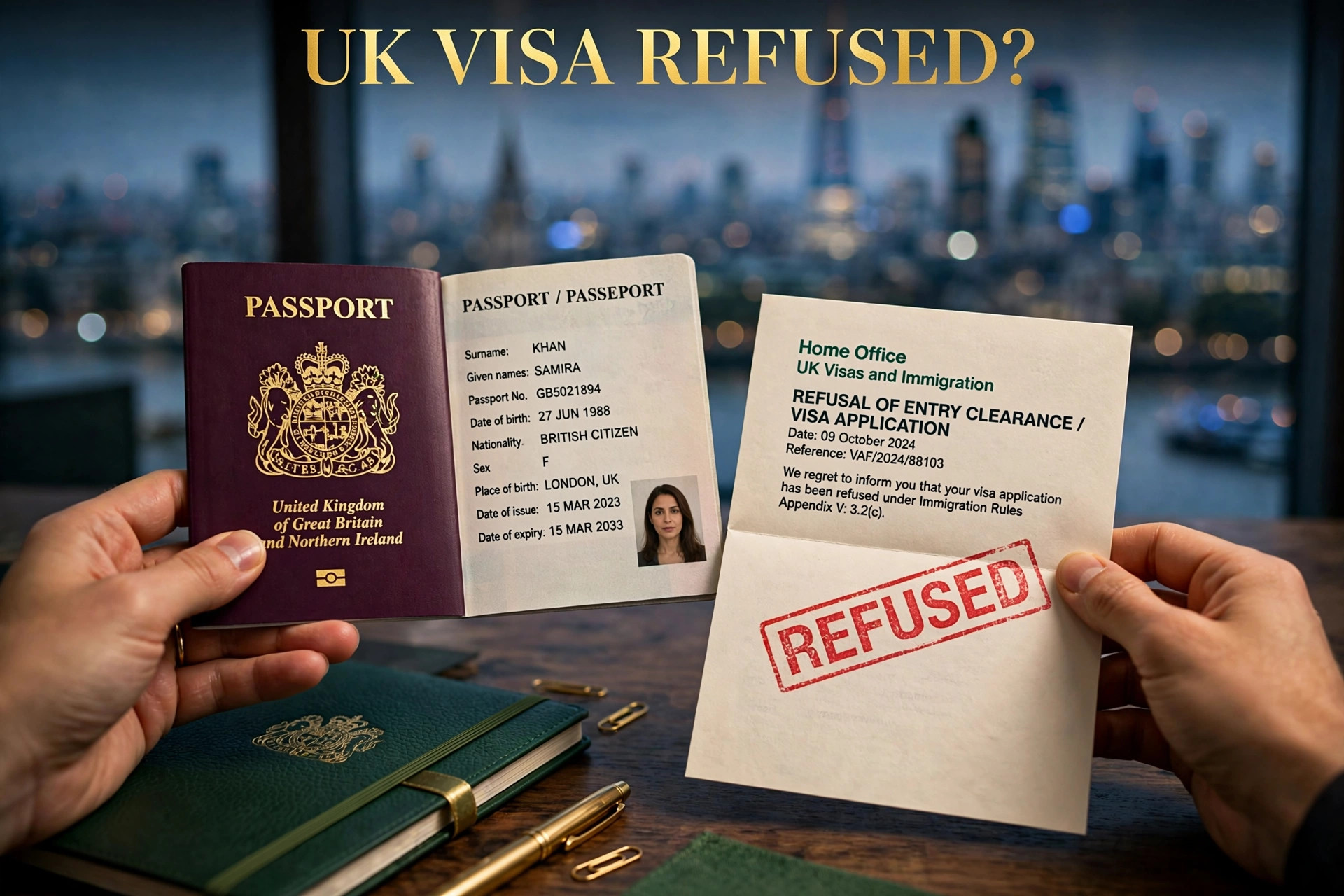
UK visa refusal reasons: the 6 patterns behind most refusals
Immigration advisers see the same handful of patterns year after year. Read them honestly against your own application — one of these is almost certainly your letter’s real subject.
1. Failing the genuine-visitor test
The single biggest refusal ground. Under Appendix V of the Immigration Rules, you must satisfy the decision-maker that you will leave the UK at the end of your visit and will not live there through repeated visits. Officers look for ties: stable employment, a business that needs you, property, family responsibilities, or ongoing study. A property deed alone is rarely enough — what persuades is a life that clearly needs you back. If your job could be done from anywhere, or you submitted no proof of leave approval, this paragraph of your refusal letter is the one that matters most.
2. Money that does not add up
The second classic. The caseworker compares your declared income with your bank statements, and the arithmetic has to tell one coherent story. The red flags are well known: a large lump sum landing in the account just before the application (“funds parking”), deposits that do not match your salary, a balance that cannot credibly cover the trip, or statements that stop short of the usual six-month run. Your savings should be proportionate to your income and comfortably exceed the trip’s cost — and every unusual transaction should be explained before the officer has to guess.
3. An unclear purpose of visit
“Tourism” is not a plan. Officers want a credible itinerary: which cities, on which dates, staying where, doing what. A two-week visit with no hotel evidence, no day-by-day logic, and a budget that would not cover the trains you claim to be taking reads as fiction. Visiting family helps enormously — a genuine invitation letter from your UK host, naming the relationship, the dates, and the address, turns a vague trip into a verifiable one.
4. Thin or inconsistent paperwork
Sometimes the story is fine but the file is not. Missing translations, a bank statement that cuts off mid-month, an employment letter without dates or salary, or — the silent killer — an online form that contradicts the documents (different job title, different travel dates, a sponsor mentioned in one place and absent in another). Caseworkers process many files a day; inconsistency is the fastest way to lose their trust. Read your own form the way a sceptic would.
5. Previous immigration history
A past overstay, a breached visa condition, or a string of rapid back-to-back visits will follow you. The Home Office shares data internally and checks the history you declared — and any gap between what you wrote and what their systems show lands as a credibility problem on top of the history itself. This is also why the new application form’s question about previous refusals must be answered truthfully, every time (more on that below).
6. Deception and suitability issues
The serious category. False documents, invented employment, or material misstatements are treated as deception under Part 9 of the Immigration Rules and can trigger a re-entry ban of up to 10 years. Even an “innocent” exaggeration — a salary rounded up, a relative’s details borrowed — can be read this way once discovered. This is the one refusal reason where you should not improvise: take professional advice before touching a fresh application.
Know your weak points before the caseworker finds them.
The Visaora Intelligence Suite reviews your visitor file the way a decision-maker reads it — funds, ties, itinerary, and consistency — and shows you exactly what to strengthen before you reapply.
Check My Score →How to read your refusal letter like a caseworker
Refusal letters follow a template, and once you see the skeleton you can work backwards. First, identify every cited paragraph of the Immigration Rules — the letter will name them (for example, a genuine-visitor paragraph under Appendix V, or a suitability paragraph under Part 9). Each citation is one exam question, and your new application is the re-sit.
Second, separate fact from interpretation. “You state you earn X, but your statements show Y” is a fact dispute you can answer with documents. “I am not satisfied you will leave the UK” is an interpretation dispute you answer with a pattern of evidence — ties, history, and purpose — not with louder insistence. Third, look for what the letter does not say: silence about your funds, for instance, usually means the money was accepted and the problem sits elsewhere. Number each issue, then build your evidence file to match the numbers one for one. The Home Office’s supporting-documents guidance was updated in February 2026 with fresh examples of the evidence that helps on personal circumstances, sponsorship, and trip purpose — use it as your checklist.
No waiting period: reapply, appeal, or challenge?
The question every refused applicant asks first — how long must I wait? — has a reassuring answer: there is no mandatory waiting period for a fresh Standard Visitor application. Legally, you could reapply the next day. The practical question is different: is the new file ready? Sending the same application again without fixing the refusal reasons is the most reliable route to a second refusal, and each additional refusal makes the next caseworker more sceptical. Take the time to rebuild properly, but do not let months drift by out of fear.
Your three routes, compared:
| Feature | Fresh application | Administrative review | Judicial review |
|---|---|---|---|
| Available for visitor refusals? | Always — no waiting period | Only if your letter specifically offers it | Available, but only for legal error |
| What it reviews | Your whole new case | Caseworker error only — not weak evidence | Lawfulness of the decision, not its merits |
| New evidence allowed? | Yes — that is the whole point | No | No |
| Cost | Fresh £135 fee | £80 (if offered) | Expensive legal route |
| Speed | Usually ~3 weeks | Can take many months | Months; pre-action protocol first |
| Best for | Nearly every visitor refusal | Clear caseworker mistakes | Rare procedural unlawfulness |
A note on appeal: unlike some other UK visa routes, a Standard Visitor refusal carries no right of appeal to the immigration tribunal — the letter itself will confirm this. Administrative review only corrects process errors (evidence ignored, rules misapplied), and judicial review challenges the legality of the decision rather than re-arguing your merits. For the overwhelming majority of visitor refusals, the corrected fresh application is the fastest, cheapest, and most effective route.
How to reapply after a UK visa refusal: the playbook

- Number the refusal letter’s issues. Write down each cited reason in your own words. If anything is ambiguous, ask an immigration adviser before guessing — answering the wrong question wastes the whole application.
- Fix the file, not just the form. Re-run the six patterns above against your evidence. Strengthen ties with an employment letter that states your role, salary, start date, and approved leave dates; add property or tenancy evidence; include family commitments. Layer evidence — two or three documents per claim beats one.
- Rebuild your finances properly. Submit six months of statements showing a stable balance and salary credits that match your declared income. If there were large deposits, explain each one with a paper trail (sale receipt, bonus letter, transfer record). Do not move money around to look wealthier — sudden choreography is a red flag of its own.
- Make the trip concrete. A day-by-day itinerary, hotel bookings or a host invitation with dates and address, and a realistic budget that your funds can cover. The itinerary’s total cost should be a sensible fraction of your savings — a trip that costs everything you own reads as one-way.
- Correct every inconsistency. Re-read your old form against your documents. Align job titles, dates, addresses, and sponsor details everywhere. Answer the previous-refusal question honestly — the Home Office already knows, and candour protects your credibility.
- Write the cover letter. This is the document that ties the repair together (detailed below).
- Apply through the correct channel and consider priority only when ready. File online via gov.uk and attend biometrics at a visa application centre. Priority processing gets a faster decision, not a more generous one — pay for it only when the file is genuinely ready.
- Disclose, disclose, disclose. Declare the refusal on this application and on every future UK or other-country application. An undiscovered refusal, once found, damages credibility far more than the refusal itself ever did.
The cover letter that answers the refusal
Your cover letter is the most important page of the reapplication. It should be short, factual, and structured as a direct reply to the refusal letter — issue by issue, each answered with the specific new evidence attached. A strong letter has four parts:
- Acknowledgement. “My application of [date] was refused on [grounds]. I have addressed each point below.” Calm, no argument, no emotion.
- Point-by-point answers. Quote or paraphrase each refusal reason, then state exactly what has changed: “On funds: the previous statements covered only three months; I now enclose six months showing salary credits of X matching my employment letter, plus an explanation of the March deposit (document 7).”
- The trip, in one paragraph. Purpose, dates, itinerary, host, and budget — so the officer does not have to assemble it from the file.
- Ties and intent. A concise summary of what brings you home: job, family, property, study — each pointing at an attached document.
Keep it to two pages. Attach it first in your document bundle so the caseworker reads it before anything else. And resist the temptation to criticise the previous decision — your job is to make the new decision easy, not to relitigate the old one.

One more refusal costs months. Make this file the last one.
Before you pay another £135, have your rebuilt application checked the way a caseworker will read it — funds, ties, itinerary, and consistency, scored and ordered by priority. That is what the Visaora Intelligence Suite does.
Check My Score →Applying from the Gulf: UAE and Saudi notes
A large share of Visaora’s readers apply from the Gulf — expatriates in Dubai, Abu Dhabi, Riyadh, or Jeddah travelling on Pakistani, Indian, Filipino, or other passports. The rules are the same, but the evidence looks different, and caseworkers know the region’s patterns:
- Apply where you legally live. If you hold a UAE residence visa, you apply through the UAE’s visa application centres and are assessed as a UAE resident — a genuine advantage, since Gulf residence itself signals stability. Do not apply from your passport country “for a better chance”; the wrong jurisdiction adds confusion, not strength.
- Ties come in two layers. Show your Gulf ties (employment contract, residence visa, tenancy contract or Ejari, salary slips) and your home-country ties (family, property, investments). An expat whose entire documented life sits in one rented room is a harder file than one whose roots are visible in both places.
- Salary in AED is fine — stability is the point. Six months of statements from your UAE or Saudi bank, salary credits matching your employment letter, no unexplained transfers. End-of-service or bonus lump sums should be labelled with a letter from your employer.
- Documents need proper translation. Arabic-language documents (tenancy contracts, some employer letters) require certified English translations — the same rule as anywhere else, and a common technical refusal in the region.
- Family visits need a real invitation. If you are visiting relatives in the UK, their invitation letter should state the relationship, your planned dates, where you will stay, and who pays for what — plus evidence of their UK status and address. A one-line “he can stay with us” invites the officer’s doubts instead of answering them.

The bottom line
A UK visitor visa refusal is a repair job, not a verdict. The six patterns above cover nearly every visitor refusal — and five of them are evidence problems you can fix. Read the letter as a caseworker would, rebuild each weak point with layered documents, answer it all in a clear cover letter, and disclose the refusal honestly. If deception or a ban is involved, get professional advice before you file anything. The second application, done properly, is very often the one that gets the stamp.
Preparing the wider trip? Start with the free tools on the Visaora homepage, browse more immigration guides, or read our companion guide to UK visitor visa requirements for 2026 before you rebuild your file.
Official sources
- GOV.UK — Visit the UK as a Standard Visitor: eligibility (gov.uk)
- GOV.UK — Apply for a Standard Visitor visa: fees and process (gov.uk)
- GOV.UK — Check if you need a UK visa (gov.uk)
Disclaimer: This guide is general information, not legal advice. UK Immigration Rules, fees, and processing times change — always confirm the current requirements on gov.uk before applying. Fee and timeframe figures quoted reflect the pages in force at the time of writing (October 2026) and should be re-checked when you file. If your refusal involves deception, a ban, or criminality, consult a qualified immigration adviser before reapplying.
FAQs: UK visa refusal and reapplication
Can I appeal a UK visitor visa refusal?
No — Standard Visitor refusals carry no right of appeal to the immigration tribunal, as the refusal letter confirms. If the letter specifically offers administrative review (£80), it can correct caseworker errors but not weak evidence. Judicial review challenges the decision’s legality, not its merits, and is lengthy and costly. A corrected fresh application is usually the fastest route.
How soon can I reapply after a UK visa refusal?
There is no mandatory waiting period — you can legally reapply the next day. The real question is whether the new file is ready. Reapplying unchanged almost guarantees a second refusal. Take the time to fix every issue the refusal letter raised, gather layered evidence, and write a point-by-point cover letter before filing again.
What are the most common UK visitor visa refusal reasons?
The recurring reasons are failing the genuine-visitor test (doubts you will leave the UK), funds that do not match your declared income or show unexplained deposits, an unclear trip purpose, thin or inconsistent documents, previous immigration breaches, and deception — false information, which can trigger a re-entry ban of up to 10 years.
Does a UK visa refusal affect future applications?
Yes — every future application will ask about previous refusals, and you must declare them honestly. The caseworker reads the old file alongside the new one, so the reapplication must visibly address each old reason. A disclosed refusal you have fixed is a manageable fact; a hidden refusal, once discovered, destroys credibility and can itself become grounds for refusal.
How much bank balance do I need for a UK visitor visa?
There is no fixed minimum — the test is whether your funds credibly cover the trip and match your declared income. Submit six months of statements showing stable savings comfortably above the trip’s cost, with salary credits matching your employment letter. Unexplained large deposits (“funds parking”) are treated as a red flag, not as strength.
What happens if I give false information on a UK visa application?
False documents or material misstatements are treated as deception under Part 9 of the Immigration Rules and can lead to a re-entry ban of up to 10 years — far worse than the original refusal. Even small exaggerations can be read this way once discovered. If your refusal letter mentions deception, seek qualified immigration advice before submitting anything further.
Should I write a cover letter when reapplying?
Yes — it is the most important page of the reapplication. Acknowledge the refusal, then answer each cited reason in turn with the specific new evidence attached. Add one paragraph on the trip (dates, itinerary, host, budget) and one on your ties home. Keep it to two pages, place it first in the bundle, and avoid criticising the previous decision.
I was refused while living in the UAE. Is reapplying harder?
The rules are identical, but Gulf-based applicants should document ties in two layers: UAE ties (job, residence visa, tenancy, salary slips) and home-country ties (family, property). Apply through the UAE’s visa application centres as a legal resident, translate any Arabic documents into certified English, and label bonus or end-of-service lump sums with an employer letter.
✈️ Planning Your Trip?
We may earn a commission — at no extra cost to you. Learn more