
Canada Super Visa Requirements 2026: The Complete Guide for Parents & Grandparents
Updated: 11 October 2026 · 10 min read
The Super Visa is a multiple-entry visitor visa that lets parents and grandparents of Canadian citizens and permanent residents stay in Canada for up to 5 years per visit, on a visa valid for up to 10 years. Your parent applies from outside Canada, passes a medical exam, and carries paid-in-full health insurance of at least CAD $100,000 — while you, the host, must meet the LICO minimum income for your household and sign an invitation letter promising financial support.
If you are settled in Canada and working through the canada super visa requirements for your mother, father, or grandparents, one question usually sits above all the others: how do we get more than a few short weeks together? An ordinary visitor visa normally allows six months at a time. The Super Visa was built for exactly your situation — and in 2026 it has become the main door through which Canadian families bring their parents for long, unhurried stays.
This guide covers the whole picture in plain language: who qualifies on both sides, the 2026 income figures and the changes that made them easier to meet, the insurance rule that trips up more families than any other, the documents and steps in order, and an honest comparison with the alternatives. Most refusals are preventable — small, fixable mistakes cause most of them.
To build the document list for your parents, use the free document checklist generator.
- Why the Super Visa matters more than ever in 2026
- Who qualifies: a two-sided eligibility test
- The income test: 2026 LICO figures
- The $100,000 insurance rule, explained properly
- The documents checklist
- How to apply, step by step
- Super Visa vs visitor visa vs sponsorship
- Why Super Visa applications get refused
- FAQs: Canada Super Visa requirements
- Parents and grandparents can stay up to 5 years per entry, on a visa valid up to 10 years — Canada’s most generous visitor option.
- With the Parents and Grandparents Program paused since July 2026, the Super Visa is the principal route for long family stays.
- The host must clear the LICO income line (CAD $38,002 for two people) — but since March 31, 2026 you may use the better of your last two tax years, and a parent’s income can top up the rest.
- Insurance is non-negotiable: at least CAD $100,000, valid one year, from an approved insurer, paid in full before applying.
- Government fees are small (CAD $100 + $85 biometrics); the real costs are insurance and the medical exam.
Four numbers every family should know before applying
Why the Super Visa matters more than ever in 2026
Canada created the Super Visa in late 2011 because ordinary visitor visas forced families into short visits and constant re-applications. The Super Visa answered with time: since mid-2023, each entry can be authorised for up to five years, and the visa itself can run for a decade, or until the passport expires.
Then, on July 15, 2026, the government paused new intake under the Parents and Grandparents Program (PGP) — the sponsorship route to permanent residence — until further notice, and IRCC pointed families toward the Super Visa instead: open year-round, no lottery or cap, decided in weeks to months rather than years. It remains visitor status — no work rights, no provincial health coverage — but for time together, nothing else currently comes close.

Who qualifies: a two-sided eligibility test
Every Super Visa application is really two applications in one envelope: you, the host in Canada, must qualify — and so must your parent abroad. A strong file on one side cannot rescue a weak one on the other.
What you must show as the host
- You are a Canadian citizen, permanent resident, or a person registered under the Indian Act, aged 18 or older and living in Canada.
- Your income meets the minimum necessary income for your total household size, measured against the Low Income Cut-Off (LICO) — counting yourself, your spouse or partner, your dependent children, and the parent(s) you are inviting.
- You sign a letter of invitation promising to support your parent financially for the entire stay.
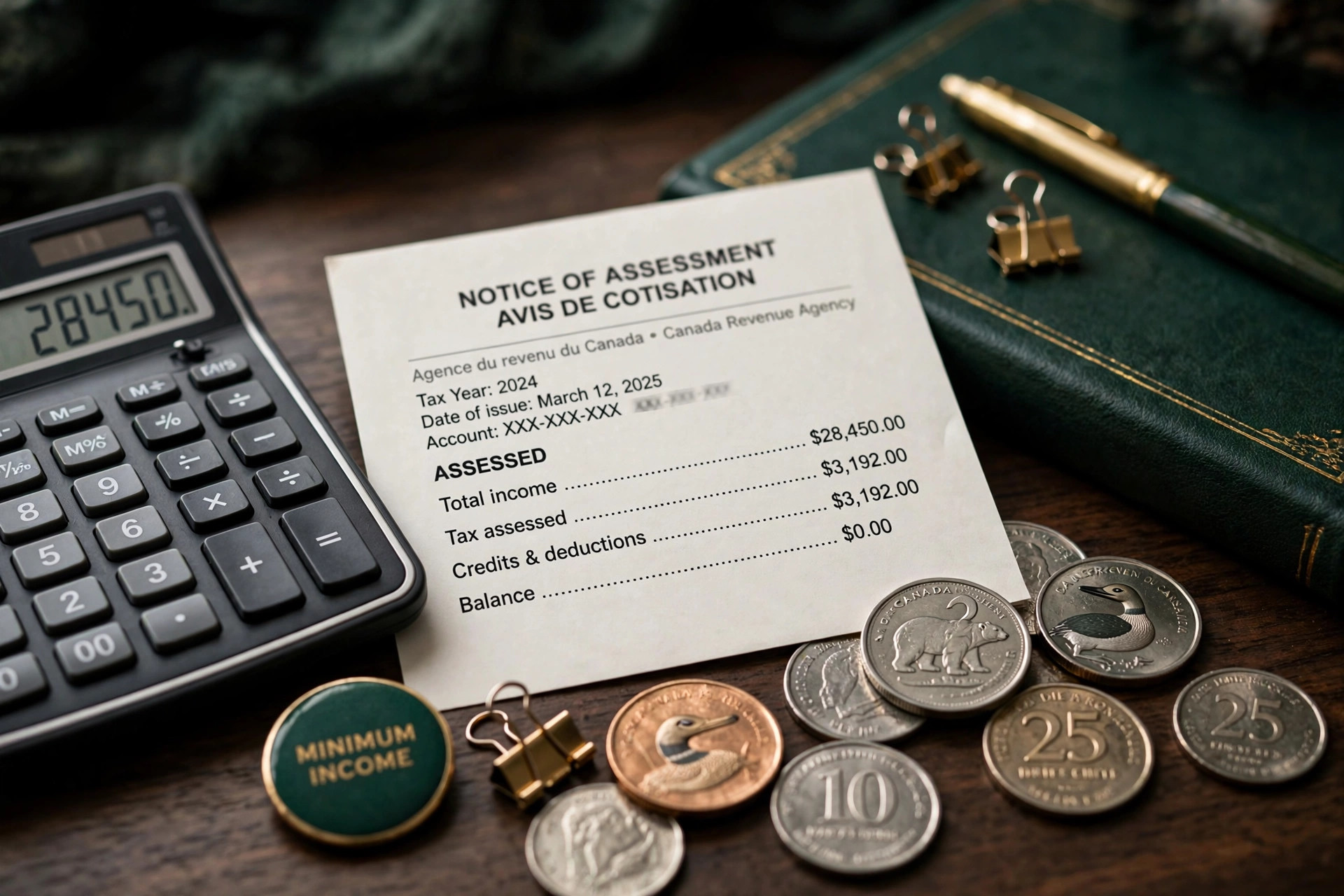
- You can prove the income on paper: CRA Notice of Assessment, T4 or T1 slips, an employment letter, pay stubs, and bank statements.
If your income alone falls short, your spouse or common-law partner may co-sign the invitation letter, and IRCC then assesses your incomes together.
What your parent must show as the applicant
- They are your parent or grandparent, by birth or adoption, and the relationship can be proven.
- They apply from outside Canada — a Super Visa cannot be applied for from within the country.
- They pass an immigration medical examination with an IRCC-approved panel physician.
- They hold qualifying health insurance that is already paid for, not merely quoted (detailed below).
- They are admissible to Canada, with no criminal, security, or health grounds of inadmissibility.
- They can satisfy the officer this is a genuine visit — real ties at home, such as property, family, or work, and an intention to leave when the authorised stay ends.
The income test: 2026 LICO figures
Income is where Super Visa applications most often come undone — usually because the household was counted wrongly, or the family used the wrong threshold. Be precise: the Super Visa uses the plain LICO figure for your household size, not LICO plus 30% — that higher bar belongs to sponsorship, and confusing the two has discouraged many families who actually qualified. The LICO figures published by IRCC and currently in force:
| Household size (including the visiting parent) | Minimum income required (CAD) |
|---|---|
| 2 people | $38,002 |
| 3 people | $46,720 |
| 4 people | $56,724 |
| 5 people | $64,336 |
| 6 people | $72,560 |
| 7 people | $80,784 |
| Each additional person | + $8,224 |
Thresholds are revised periodically — confirm the table in force on IRCC’s official Super Visa eligibility page (linked in the sources below) before you file.
The March 2026 changes: two new ways to qualify
On March 31, 2026, IRCC loosened the income test in two ways that genuinely help. First, the better-of-two-years rule: you may qualify on either of the two most recent tax years, so a year dented by parental leave or a layoff no longer sinks the file if the year before was solid. Second, a parent’s own income can contribute: where your income reaches at least 75% of the threshold, your parent’s income — pension, rent, remote work, investments, documented over 12 months and continuing during the stay — can cover up to 25% of the line, and two applying parents may combine theirs. Refused on income before these changes? Redo the arithmetic — many households that fell short now clear the bar.
The $100,000 insurance rule, explained properly
Super Visa holders are visitors, so provincial health plans do not cover them — which is why Canada insists the risk be privately insured, and checks that it is. A compliant policy must meet every condition below:
- Coverage of at least CAD $100,000, spanning health care, hospitalisation, and repatriation.
- A term of at least one full year from the date your parent enters Canada.
- Issued by a Canadian insurance company or a foreign insurer approved to operate in Canada. Brokers and claims administrators are not insurers — the policy must stand behind an approved insurer.
- Paid in full before applying. Uploading a quote or an unpaid invoice is the most common technical refusal in this category.
Coverage must be maintained for the whole stay and renewed if the first year lapses first. Have your parent travel with the policy in hand luggage — a border officer can ask for proof on arrival.

Bringing your parents to Canada? Check the file before IRCC does.
Most Super Visa refusals trace back to the invitation letter, the income evidence, the insurance wording, or thin proof of ties back home. The Visaora Intelligence Suite reviews your case file against the patterns officers look for — and shows you what to strengthen first.
Check My Approval Chances →The documents checklist
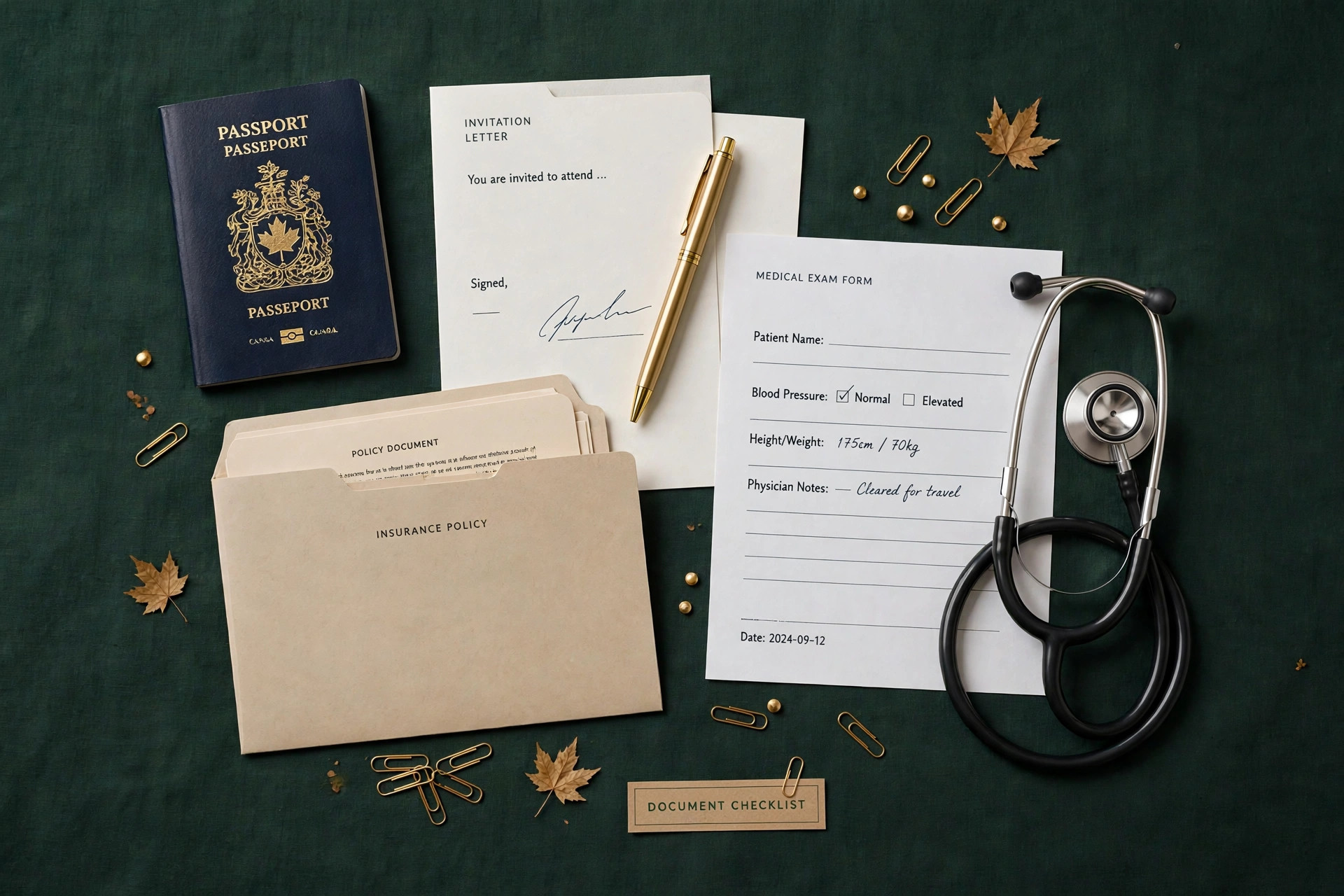
Assemble everything before opening the portal — chasing paper mid-application is how names get misspelled and the wrong year’s tax return gets uploaded. From you, the host: proof of status in Canada (citizenship certificate or PR card); the signed invitation letter covering the relationship, purpose and length of the visit, your household size, and your promise of financial support; and income evidence — Notice of Assessment, T4 or T1 slips, employment letter, pay stubs, bank statements. From your parent: a valid passport, proof of the relationship (such as your birth certificate), the completed immigration medical exam, and the paid insurance policy. Mind validity periods: the visa cannot outlast your parent’s biometrics validity or passport, so renew anything near expiry before filing.
How to apply, step by step
- Build the file. Gather the checklist above — host documents, relationship proof, medical exam, paid insurance.
- Write the invitation letter properly. Name the relationship, the reason for the visit, the intended length of stay, your household, and your commitment of support. Specifics disarm scrutiny; a vague two-liner invites it.
- Buy the insurance — and pay in full. Compare providers and deductibles, confirm the insurer is approved, and keep the paid policy ready to upload.
- Apply online through the IRCC portal. Your parent applies from outside Canada; in the questionnaire, choose “Visitor visa or super visa,” then the option for visiting children or grandchildren for over six months.
- Pay the government fees. CAD $100 for the application and $85 per person for biometrics, capped at $170 total for a family giving biometrics together. The medical exam and insurance are paid separately.
- Give biometrics — fingerprints and a photograph at a Visa Application Centre, when IRCC requests them.
- Wait for a decision. Timelines differ sharply by visa office and no single figure is published; use IRCC’s processing-times tool for the office handling the file.
- Send the passport, then travel. On approval, IRCC requests the passport to insert the visa. The border officer makes the final call at the airport, so your parent should carry the insurance proof and invitation letter in hand luggage.
Super Visa vs visitor visa vs sponsorship
Three instruments get mixed up in family conversations. Here they are, side by side:
| Feature | Super Visa | Regular visitor visa (TRV) | PGP sponsorship |
|---|---|---|---|
| Stay per entry | Up to 5 years | Up to 6 months | Permanent |
| Validity | Up to 10 years, multiple entries | Short-term, case by case | Permanent resident status |
| Host income test | Required — LICO | Not required | Required — LICO + 30% |
| Health insurance | Mandatory — $100K, 1 year, paid | Not required | Not required after PR |
| Work rights | Not permitted | Not permitted | Full rights as a PR |
| Status in 2026 | Open — apply any time | Open | Paused since July 2026 |
| Best for | Long family stays, soon | Short visits | Permanent settlement, when it reopens |
The practical choice is simpler than the table: a fortnight’s holiday suits the ordinary visitor visa, while a winter or a newborn’s first year is exactly what the Super Visa exists for — and with sponsorship paused, it is the only route that can put your parents on a plane soon.
Why Super Visa applications get refused
Refusals in this category are rarely mysterious. The same five causes keep appearing:
- Income that misses the line. Still the leading cause. Recount the household, check which tax year serves you best under the March 2026 rules, and consider a co-signing spouse or a parent’s top-up income before giving up.
- Insurance that fails the fine print. A quote instead of a paid policy, coverage under $100,000, a term shorter than a year, or an unapproved insurer — each is fatal on its own.
- An invitation letter that says almost nothing. Two vague lines force the officer to guess at everything else; the letter exists to give specifics.
- Unconvincing ties back home. The officer must believe the visit will end. Property, remaining family, or employment at home are the evidence; silence reads as risk.
- Sloppy paperwork. A Notice of Assessment from the wrong year, missing statements, names spelled differently across documents — small errors, final consequences.
One refusal can cost your family a year apart.
Before you submit, have the whole file — invitation letter, income proof, insurance, ties evidence — reviewed the way an officer will read it. The Visaora Intelligence Suite turns that review into a clear, ordered list of fixes.
Check My Approval Chances →FAQs: Canada Super Visa requirements
How long can my parents stay in Canada on a Super Visa?
Up to five years on a single entry, a limit in place since mid-2023. The visa itself can be valid for up to ten years with multiple entries. The border officer confirms the authorised stay at each arrival, and your parents may apply from inside Canada to extend a stay before it expires.
How much income do I need to host my parents in 2026?
Your household must meet the LICO minimum for its full size, counting your parent among the members. Two people need CAD $38,002; four need $56,724; seven need $80,784, with $8,224 added per extra person. This is the plain LICO line — not the LICO-plus-30% figure used for sponsorship.
My income dropped last year. Can I still qualify?
Very possibly. Since March 31, 2026, IRCC lets you qualify on the better of your two most recent tax years, so a year weakened by parental leave or job loss need not decide it. A spouse or partner can also co-sign the invitation letter so your incomes are assessed together.
Can my parent’s own income count toward the requirement?
Yes, under rules introduced on March 31, 2026. If your own income reaches at least 75% of the LICO threshold, your parent’s income — pension, rent, remote employment, or investments — may cover up to 25% of the requirement. It must be documented over twelve months and continue during the stay; two applying parents may combine theirs.
Does the insurance really have to be paid in full before applying?
Yes — this is strictly enforced. The policy must provide at least CAD $100,000 covering health care, hospitalisation, and repatriation, run for at least one year from entry, and come from a Canadian insurer or an approved foreign insurer. It must be paid in full when you apply; a quote is not accepted.
Can my parents work or use public health care on a Super Visa?
No. A Super Visa confers visitor status only: no employment, no study beyond short courses, and no provincial health coverage — which is precisely why paid private insurance is mandatory. A parent who wants to work in Canada needs a work permit under a separate stream.
What happened to the Parents and Grandparents Program?
On July 15, 2026, the government paused new intake under the Parents and Grandparents Program, with no further invitations until further notice, and IRCC now directs families to the Super Visa for extended stays. Sponsorship to permanent residence is unavailable for now; the Super Visa is open immediately, with no cap or lottery.
How much does a Super Visa cost, and how long does it take?
Government fees are CAD $100 plus $85 per person for biometrics, capped at $170 for a family giving biometrics together; the medical exam and insurance are paid separately and cost more. Processing runs from weeks to a few months by visa office — check IRCC’s processing-times tool for your parent’s country.
The bottom line
The Super Visa asks a lot of paperwork, and in return offers something no other visitor route does: years with your parents, not weeks. Get the income arithmetic right, buy compliant insurance and pay for it in full, write an invitation letter that actually says something, and evidence your parent’s life back home as carefully as their plans in Canada.
Planning the wider move? Start with the free tools on the Visaora homepage, browse more immigration guides, or read our companion guide to Canada visitor visa requirements if a shorter trip is also on the table.
Official sources
- IRCC — Super Visa eligibility (canada.ca)
- IRCC — Notice on managing the Parents and Grandparents Program intake (canada.ca)
Disclaimer: This guide is general information, not legal advice. Immigration rules and income thresholds change — always confirm the current requirements on canada.ca before applying. Figures quoted reflect the tables in force at the time of writing and should be re-checked when you file.
✈️ Planning Your Trip?
We may earn a commission — at no extra cost to you. Learn more