214(b) Visa Refusal: What It Means and How to Overcome It (2026)
If your U.S. visa application ended with a blue slip citing Section 214(b) of the Immigration and Nationality Act, you are not alone. The 214(b) refusal reason is the single most common ground for refusing B-1/B-2 visitor visas — and it is also one of the most misunderstood. Many applicants read the word “refusal” and assume something was wrong with their documents. In reality, a 214 b visa rejection is almost never about a missing paper. It is about a judgment call: the officer did not believe you would return home.
The good news is that 214(b) is not a permanent bar. There is no formal waiting period, no ban, and no appeal process — but there is a right way and a wrong way to try again. This guide explains what INA 214(b) actually says, why officers reach for it, the ties evidence that genuinely moves the needle, how to talk about those ties in your interview, and what a real “changed circumstances” reapplication looks like.
What INA 214(b) Actually Says
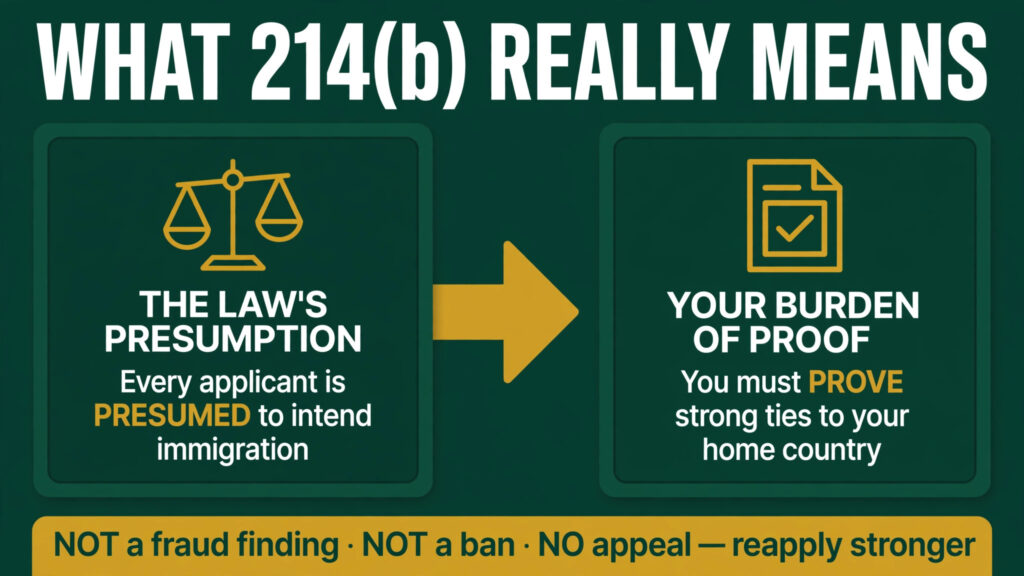
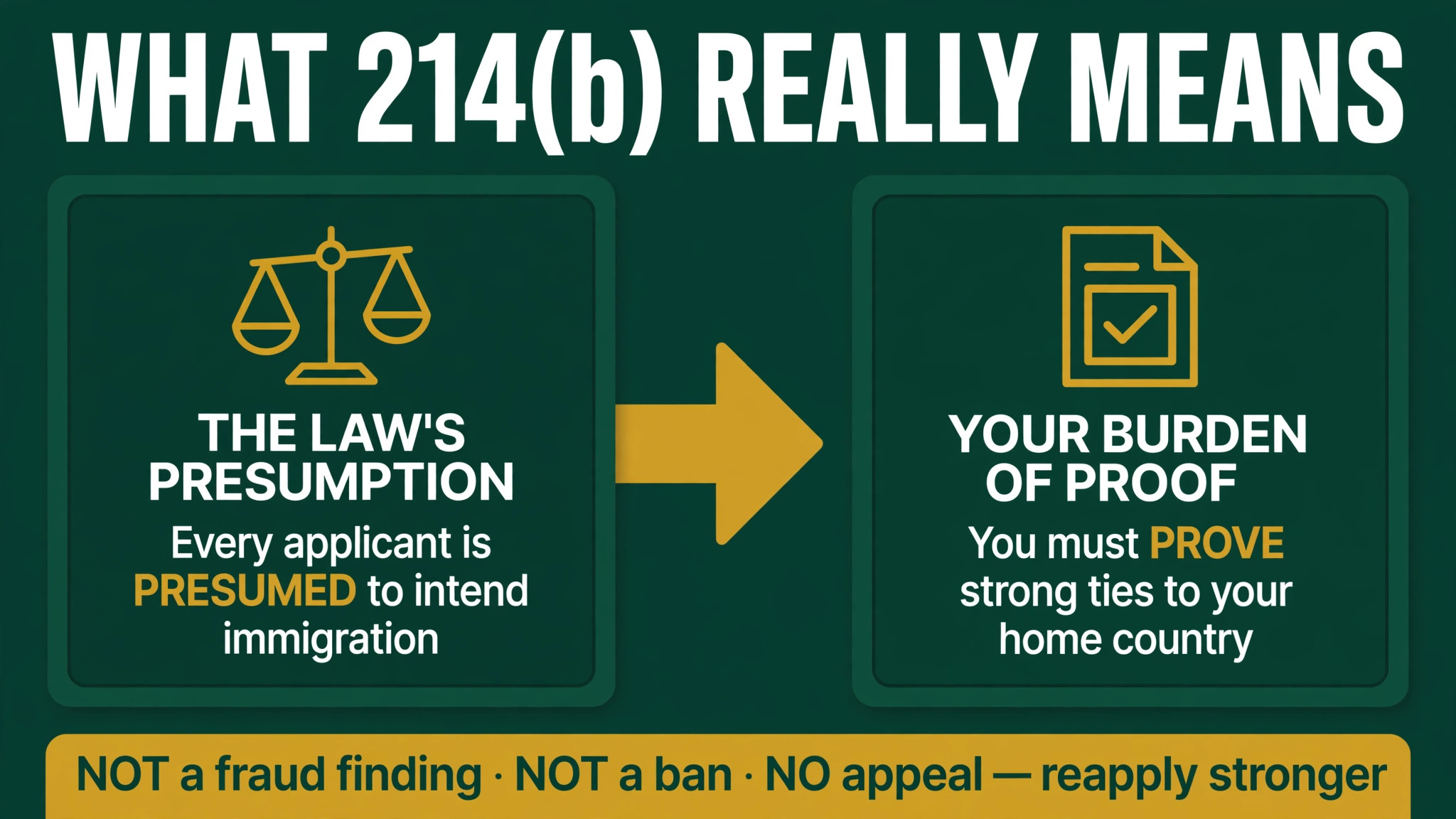
Section 214(b) of the Immigration and Nationality Act creates a legal presumption: every applicant for a nonimmigrant visa is presumed to be an intending immigrant until they establish, to the officer’s satisfaction, that they are entitled to nonimmigrant status. In plain English, the burden of proof is on you — not on the consulate.
A few important clarifications:
- 214(b) is not an accusation of lying. It is not a fraud finding.
- 214(b) is not a ban. You can reapply — though doing so without changes wastes the fee.
- There is no appeal. Your remedy is a stronger reapplication.
Why Officers Use 214(b)
A consular officer interviews dozens of applicants a day and must decide, in minutes, whether each person is a genuine temporary visitor. Common patterns leading to 214(b):
- Weak or vague travel purpose. “Tourism” with no itinerary or bookings looks thin.
- Ties that look thin on paper. Young, single, newly employed, renting, little travel history.
- Financial picture that does not add up. Sudden balances, mismatched income, unclear sponsors.
- Previous immigration history. Overstays or prior violations raise red flags.
- Interview answers contradicting the form. Any mismatch destroys credibility fast.
Know Your Ties Strength Before You Reapply
The Visaora free tools analyzes your profile the way a consular officer would — scoring your ties, flagging weak spots in your documents, and building a reapplication strategy. Check your approval-readiness before you pay the fee again.
Check My Readiness →The Strongest Ties Evidence That Overcomes 214(b)
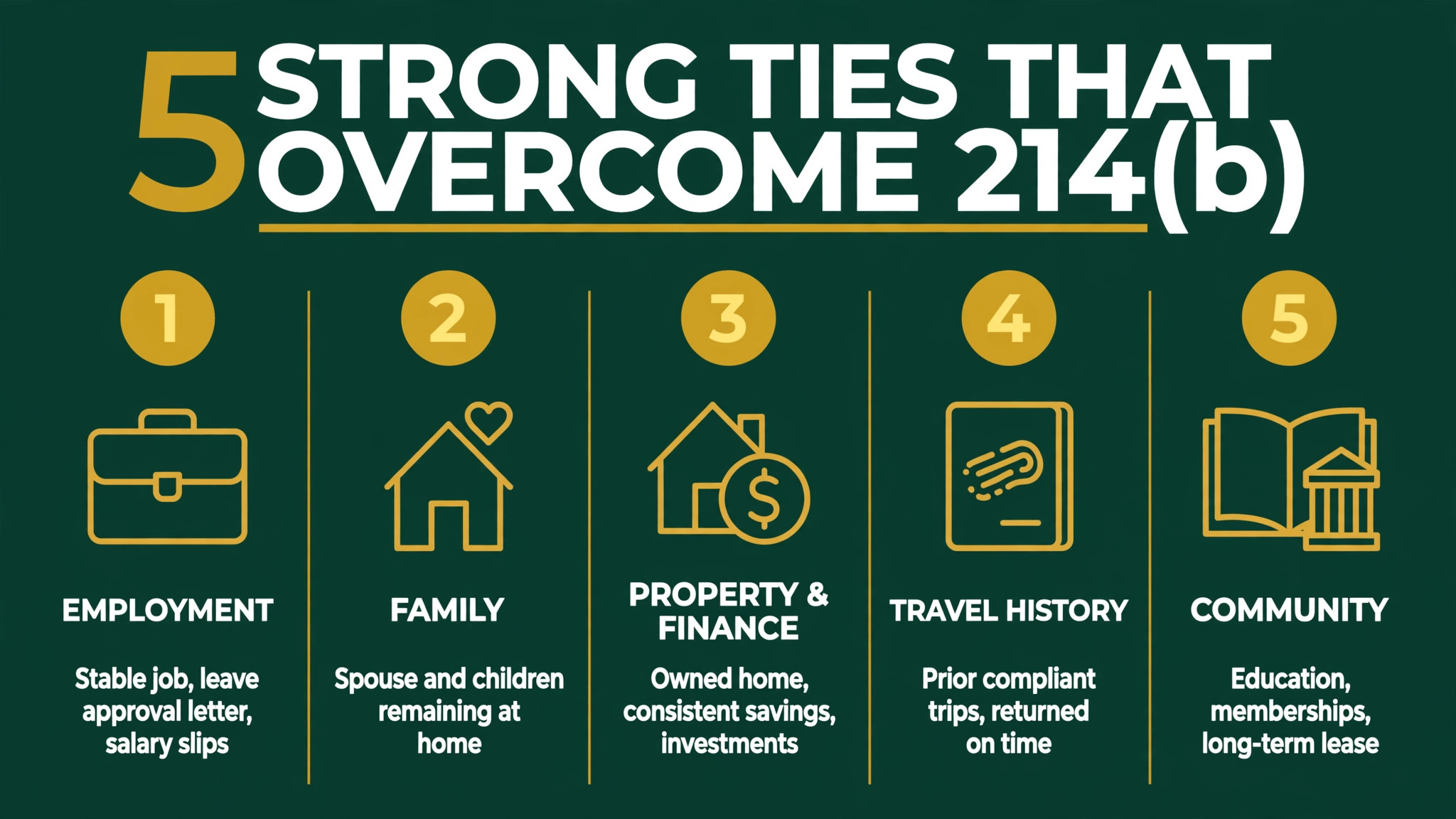
1. Employment ties
A stable job is the most persuasive tie: length of service, a formal leave approval letter on company letterhead, salary slips, or for the self-employed, tax returns and client contracts.
2. Family ties
Spouse and children remaining at home are powerful ties. Be honest on the DS-160; officers verify.
3. Property and financial roots
Owned property signals investment in your home country. A large lump-sum deposit made weeks before the interview does the opposite — it looks manufactured.
4. Travel history
Previous compliant travel to strict-visa countries is excellent evidence. A blank passport makes 214(b) harder to overcome.
5. Community and social ties
Ongoing education, professional memberships, community roles, long-term leases — individually minor, together they complete the picture.
How to Present Your Ties in the Interview
- Lead with purpose, anchor with ties. State why you’re going, then connect to what brings you back.
- Answer the question asked — nothing more. Short, specific, confident answers build credibility.
- Bring documents, but don’t dump them. Offer them only if relevant.
- Keep your DS-160 and story identical. Any mismatch reads as dishonesty.
- Stay calm and respectful. A refusal is a decision, not a negotiation.
Sample Answers: Weak vs Strong
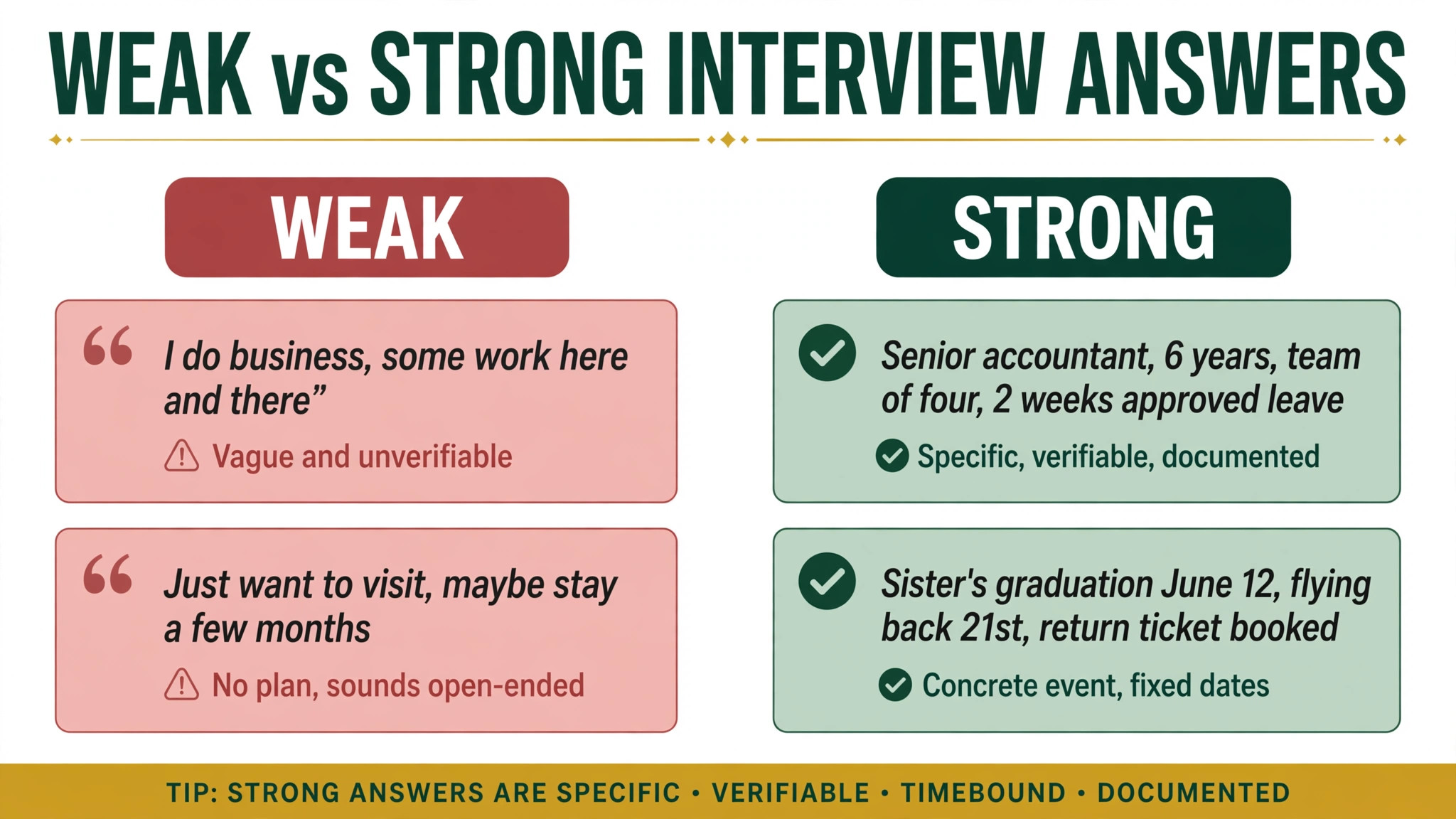
“What do you do?”
✗ Weak
“I do business. I have some work here and there.”
Why it fails: Vague, unverifiable, suggests unstable income.
✓ Strong
“I’m a senior accountant at [Company], where I’ve worked for six years. I manage a team of four, and I have two weeks of approved leave for this trip.”
Why it works: Specific role, tenure, responsibility, documented leave.
“Why do you want to go to the United States?”
✗ Weak
“I just want to visit and see places. Maybe stay a few months.”
Why it fails: No plan; “a few months” sounds like nowhere to be.
✓ Strong
“My sister is graduating from her master’s program in Boston on June 12th. I’ll attend the ceremony, spend a week with her family, and fly back on the 21st — my return ticket is already booked.”
Why it works: Concrete event, fixed short duration, return ticket.
What “Changed Circumstances” Really Looks Like
Genuine changed circumstances: a new stable job with documented tenure, marriage or a child, property purchase, significant compliant travel history since the refusal.
What does NOT count: reapplying with the same profile two weeks later, a “better” invitation letter, or switching consulates.
Before you rebook, rehearse with the free B1/B2 interview prep checklist.
How Long Should You Wait Before Reapplying?
There is no official waiting period. Practically, the question is whether your case is stronger than last time. Rushing back with an unchanged file is the most common 214b reapply mistake — officers see your previous refusal and compare.
Don’t Guess — Measure Your Readiness First
Before you book another interview, run your updated profile through the Visaora free tools. It scores your ties strength and approval-readiness, flags exactly what changed, and gives you a clear reapplication strategy.
Score My 214(b) Recovery →FAQs
1. What does 214(b) mean on a visa refusal?
It means the consular officer determined you did not overcome the legal presumption that you intend to immigrate to the United States.
2. Can I overcome a 214(b) refusal?
Yes. 214(b) is not a permanent bar. Many applicants succeed on a second or third attempt after genuinely strengthening their case.
3. How soon can I reapply after a 214(b) refusal?
There is no mandatory waiting period. However, reapplying with an unchanged profile usually leads to another refusal.
4. Does a 214(b) refusal affect applications to other countries?
Not automatically, but many visa forms ask about prior refusals. Answer honestly.
5. Will an invitation letter from the U.S. help overcome 214(b)?
Very little. Officers give invitation letters minimal weight in 214(b) cases.
6. Should I hire someone to help with my 214(b) reapplication?
A careful review of your previous application can be valuable. What matters is an honest assessment of your ties and a strategy built around evidence — the Visaora free tools provides exactly that kind of structured readiness check.
✈️ Planning Your Trip?
We may earn a commission — at no extra cost to you. Learn more
Pingback: B-1/B-2 Visitor Visa Interview Preparation 2026 | Visaora
Pingback: DS-160 Mistakes That Cause B-1/B-2 Refusals (2026)